
Field Water Analysis: Why Fast Measurements Matter in Environmental Projects
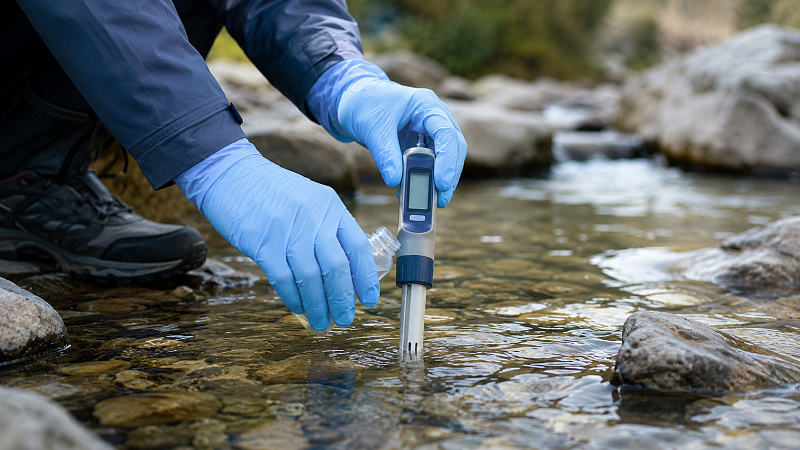
Field water analysis is used when specialists need to obtain primary information about a water body directly on site. This may involve a river, lake, reservoir, channel, groundwater well, industrial discharge point or treated wastewater outlet.
Laboratory analysis provides high accuracy and allows a wide range of parameters to be studied. However, in environmental projects it is often necessary to understand the situation immediately: select sampling points, identify risk zones, check suspicious areas and record the condition of water at the exact moment of inspection.
Portable field instruments are especially useful for measuring:
- water temperature;
- pH level;
- dissolved oxygen;
- conductivity and salinity;
- turbidity;
- oxidation-reduction potential;
- specific ions or pollutants when specialized methods are used.
The key advantage of field measurements is speed. A specialist sees the result immediately and can adjust the survey plan: take additional samples, change the sampling depth, check nearby points or repeat the measurement if values are unstable.
Field data also help interpret laboratory results correctly. For example, temperature, pH and dissolved oxygen may change quickly over time. Recording these parameters on site makes the final assessment more complete and reliable.
The quality of field analysis depends not only on the instrument. It is important to follow the measurement method, use clean sampling containers, maintain sensors properly, perform calibration and consider environmental conditions. Even a high-quality device can produce incorrect results if the electrode is dirty or the measurement is carried out incorrectly.
For environmental organizations, industrial enterprises and research teams, portable instruments become everyday tools for operational control. They help reduce uncertainty, assess the situation faster and make decisions without waiting for the full laboratory cycle.