
Industrial Environmental Monitoring: Why Enterprises Need Autonomous Control Stations
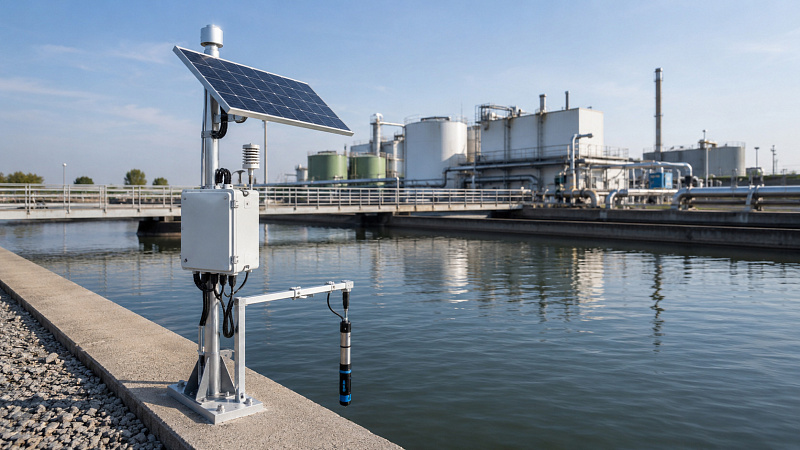
Industrial environmental monitoring is not just a formal part of environmental reporting. For enterprises that work with water, reagents, raw materials or process wastewater, it is a practical tool for managing risk, protecting production stability and maintaining responsibility toward the environment.
At industrial sites, single laboratory measurements are often not enough. The condition of wastewater and process water can change during the day, after equipment adjustments, during peak production loads or in emergency situations. Autonomous control stations make it possible to monitor key parameters directly at the site and see changes in dynamics.
Autonomous monitoring stations help solve several important tasks:
- continuous or scheduled measurement of wastewater and process water parameters;
- control of pH, temperature, conductivity, turbidity, suspended solids and other indicators;
- early detection of deviations from normal operating conditions;
- reduction of the risk of unnoticed discharge of contaminated water;
- accumulation of reliable data for analysis, reporting and modernization planning.
The main value of such systems is that they show not only the final condition of water, but also the behavior of the process over time. If a parameter begins to shift gradually, specialists can detect the problem before it turns into a critical incident.
Automated monitoring does not replace laboratory analysis. It complements it. A control station provides a current picture directly at the facility, while laboratory methods make it possible to verify results, investigate complex parameters and confirm compliance with internal or regulatory requirements.
A well-designed monitoring system should take into account the type of production, wastewater composition, operating conditions, required data transmission format, availability of consumables and maintenance requirements. That is why equipment selection should be based not only on instrument specifications, but also on the real tasks of the facility.
Modern environmental control is becoming an integral part of industrial safety. An enterprise that understands the condition of its water flows in real time has more opportunities to prevent violations, optimize processes and demonstrate a responsible approach to environmental protection.