
Analysis of Formation and Process Water in the Oil and Gas Industry
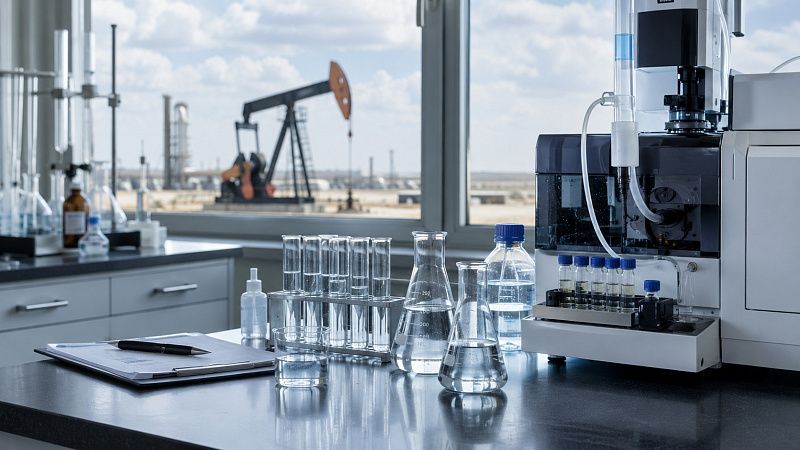
Formation and process water plays an important role in the oil and gas industry. Its composition affects production, raw material preparation, equipment operation, corrosion processes and deposit formation. That is why regular water analysis is necessary not only for environmental control, but also for production stability.
At oil and gas facilities, water may contain salts, dissolved gases, mechanical impurities, petroleum products, iron, chlorides, sulfates and other components. Their concentrations may vary depending on the field, depth, production technology and operating mode.
Water analysis helps solve several practical tasks:
- assessment of mineralization and salt composition;
- control of parameters that influence corrosion of pipelines and equipment;
- detection of deposit formation risks;
- selection of reagents for water treatment;
- comparison of data from different wells and production areas;
- confirmation of technological operations and laboratory methods.
Such studies may require titrators, pH meters, conductivity meters, photometers, reactor blocks, sample preparation systems and specialized consumables. Accuracy is important, but so are repeatability, convenience when working with sample series and the ability to document results.
Titrimetric methods remain relevant because they provide reliable data for a number of key indicators. When a laboratory workflow is organized correctly, they are suitable both for routine production control and for research tasks.
The quality of analysis begins with sampling. If a sample has been collected incorrectly, contaminated, overheated or stored for too long under unsuitable conditions, even the most accurate equipment cannot fully correct the error. Laboratory work should therefore be linked with a clear procedure for sampling, labeling and sample delivery.
For oil and gas enterprises, analytical equipment is part of technological reliability. The better a company understands the composition of its water, the easier it is to predict risks, maintain equipment and make decisions on process optimization.